Your voice, written in red crayon. Your hand is the needle that plays it back.
It runs in your browser, best on your phone. Open wonderlism.com/soundscript on it.
- Gesture
- Sound
- Camera
- Mic
- Touch
Say something, then pinch the air over a line. Hold still to listen, move along the line to scratch. No camera? Touch a line and drag.
About
In 1857 Édouard-Léon Scott fixed a bristle to a membrane and let it scratch a line on a turning drum, so that a voice shook the line as it went. These were the first recordings ever made, and nobody could play them back. That took until 2008, when the sheets were scanned and the line was read off the picture.
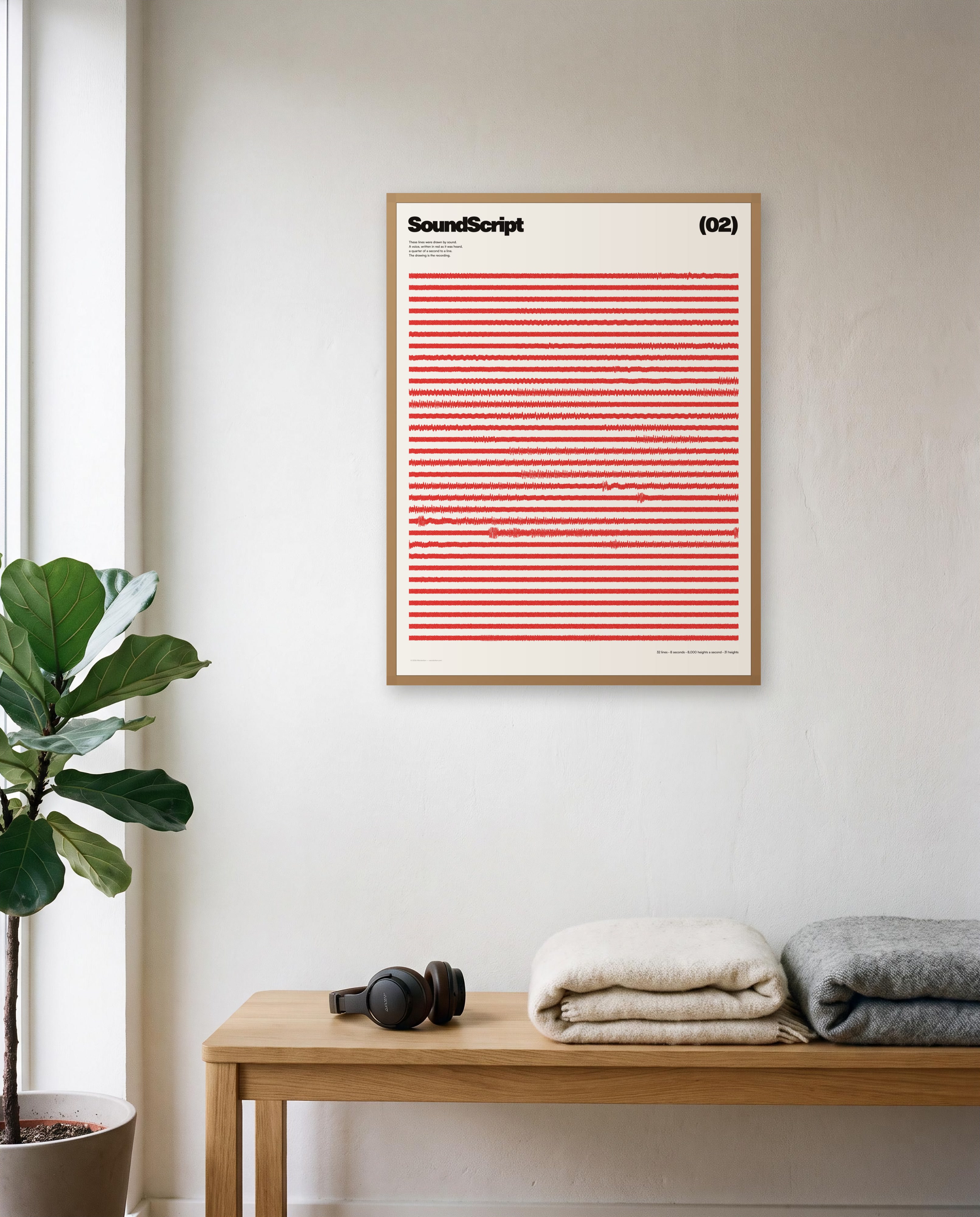
SoundScript writes your voice the same way, in red crayon. Every line of the sheet is a quarter of a second of the microphone, thirty-two lines make eight seconds, and the drum turns only while it hears something. The heights the line stands at are the recording and there is no other copy, so your voice comes back with exactly as much detail as the drawing holds: 31 heights, eight thousand a second.
Your hand is the tonearm. Pinch the air over a line and a needle drops there. Hold the pinch still and it reads on at speaking pace. Move it along the line and it goes at your hand’s speed, backwards too. The sheet arrives with Au clair de la lune on it, the song Scott sang into his machine in 1860, and your voice writes over it.
Prints
shop.wonderlism.com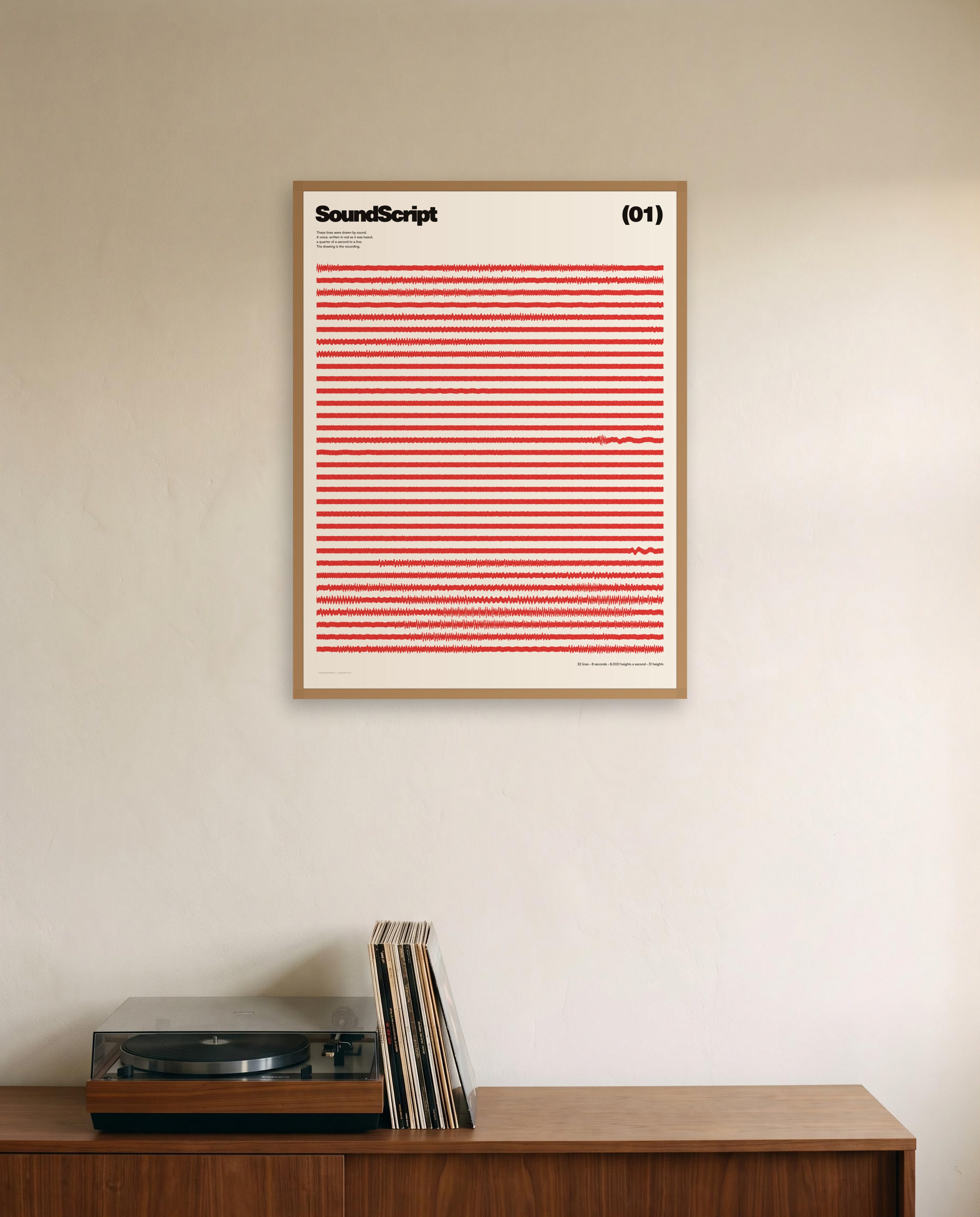
Facts
- Year
- 2026
- Form
- Browser piece, camera, microphone and sound
- Played with
- Your voice, then a pinched hand read by the camera
- Sound
- Your voice, read back off the drawing: 31 heights, 8,000 a second
- After
- Édouard-Léon Scott’s phonautograph, 1857
- Made with
- Canvas, MediaPipe hand tracking, an AudioWorklet